Window vents
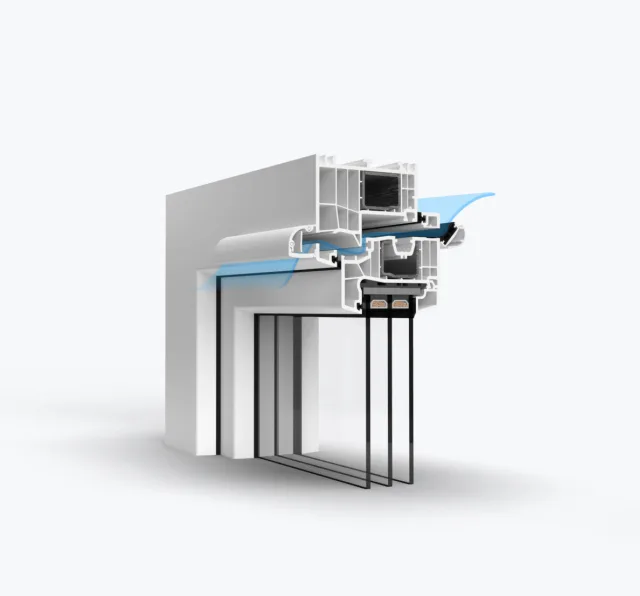
Window air Inlets are small longitudinal devices usually installed at the top of the window frame. They are installed mainly to limit the opening of windows (especially during the heating season), but at the same time to provide ventilation in the building. Air inlets are used for controlled air exchange in the room, they are not used in buildings with recuperation. Modern windows are very tight, which limits air circulation. This is conducive to many unfavorable aspects - indoor mold, hypoxia in the body. In polluted cities, it is recommended to install Air inlets with an air filter. Window ventilators should not cool the flat. It is recommended to install an air vent in each room, on each window.
Price on request
Air inlets - general information
In our offer, we have many types of air inlets for you:pressure - they operate on the basis of the pressure difference inside and outside the building. In this way, air control is automatic. The Air inlet adjustment is very limited. Automation allows for optimal aeration of rooms, and the pressure-based system prevents the room from getting too cold. However, if the user is interested in greater control of air flow regulation, it is recommended to choose a manually regulated vent. Pressure Air inlets available in our offer include:
Fvent 1250Preso AMOglass-mounted - installed between the glass and the glazing bead: DucoFlatDucoKlepDucoLineRenson THM90Renson AR75humidity sensitive - their operation is based on the air humidity in the room. The Air inlet has a sensor made of polyamide tape. Under the influence of humidity, the belt changes its length, which changes its length and thus opens the Air inlet to the desired width. As a result, 8 or 16 polyamide sensor strips activate one or two dampers, thus regulating the intensity of the air flow in accordance with the level of relative humidity of the environment. . Hygro-controlled Air inlets available in our offer include: Aereco EMMSM HYexternal: Ventair TRDnAventa Slimline 2000Renson Invisivent Air LightRenson Invisivent Air BasicRenson Invisivent Air HighRenson Invisivent Comfort Highrebate - placed inside part of the frame, which makes it almost invisible when the window is closed. It allows air to circulate at the place of its installation: Regel-Air® FFL - H and KRegel-Air® PLUSRegel-Air® FORTEArimeo Classics SAvailable cuts for an air inlet:
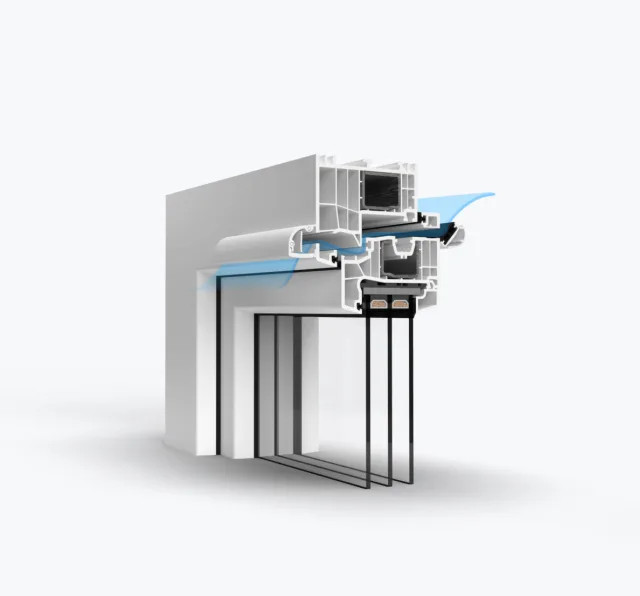
Installation of Air inlets
The Air inlet should remain installed in the upper part of the window at a height of at least 180 cm above the floor level. Such placement has a positive effect on thermal comfort. Air inlet should be installed primarily in bedrooms and the kitchen. Installing window ventilators is not necessarily recommended if we are dealing with a supply and exhaust system, especially when it is enriched with a recuperator, i.e. a mechanism that recovers heat from used air, before its removal outside the building. They should not be installed in bathrooms (a ventilation grate is necessary here, and the inflow is realized through the openings in the door - the air is already heated, which in the bathroom is of great importance for comfort. When installing window Air inlets, first determine their number. For this, you first need to know the performance of the selected models. Later, the recommended amount of air for the given rooms in the building is added up and divided by the air inlet capacity. The result will show you the approximate recommended number of these devices. In practice, it is assumed that a room with an area of up to 20 m2 must have at least one Air inlet. The larger the room, the more you will need. They should not be missing in kitchens, laundries and technical rooms. To place the Air inlet in the window, mounting holes are made in it, screwed on, and then covers are attached. Installing the Air inlet in the window takes about 30 - 40 minutes. A properly installed Air inlet should be placed in the upper part of the window, with the nozzle directing the supplied air towards the ceiling, where the air is warmest. As a result, cool air from outside is immediately mixed with warm air, without excessive cooling of the ventilated rooms. The installed Air inlet must not be an obstacle to the opening of the window. To avoid this problem, the recommended place to install the Air inlet is in the center of the window cover or moving it towards the handle. Mounting on the hinge side may damage the Air inlet when opening the window. The most important thing in a properly performed assembly is not visible at first glance - these are assembly holes. In the case of PVC windows, the mounting holes are made in the rebates of frames and window sashes. In wooden windows, holes are made in the sash itself or through the window frame. The decision to choose the place of installation should be made on the basis of the available distance between the window sash and the lintel. The proper operation of the Air inlets is guaranteed by the holes made strictly according to the recommendations of the Air inlet manufacturer, i.e. with the appropriate opening in the shape and size, adapted to the given type of the Air inlet. Assembly errors The most common assembly error is the installation of the Air inlet in the window frame or the sash with the breach of the reinforcement chamber - this weakens the window structure, uncovers a steel part that is susceptible to corrosion, moreover, when milling in steel, there may be a likelihood of melting plastic, i.e. actually destroying it windows. Another common mistake is the installation of the Air inlet at the bottom of the window - the air entering the room can cause excessive cooling and an unpleasant feeling of "waving on the back". Hygro-controlled and pressure Air inlets must always be mounted on top of the woodwork, otherwise they do not meet the declared parameters.
Air Inlet Duco
Air Inlets available for PVC windows are mounted between the glass and the glazing bead. They can be mounted on glazing units: DucoFlat: 24-32 mm DucoKlep: 24-48 mmDucoLine
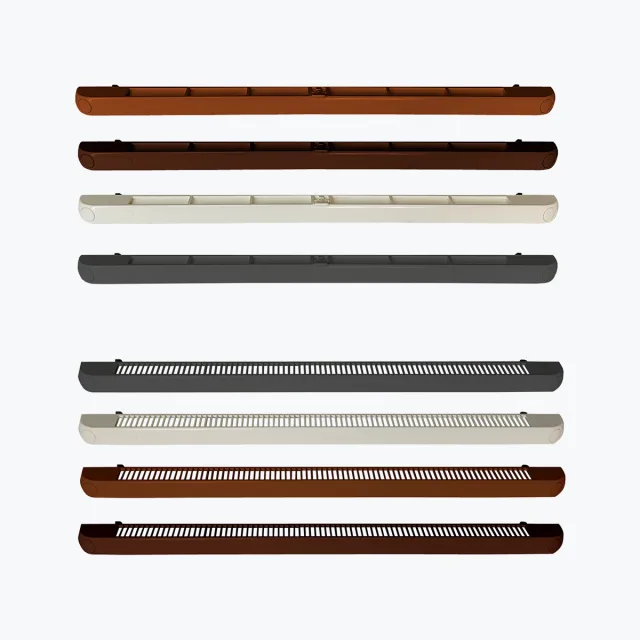
The Air inlets can be painted with a color from the inside and outside. Colors available from the standard RAL palette and the manufacturer's palette Duco300RAL. In some Duco300RAL color options, the varnish type is sandblasted, glossy or matte. The Air inlet tips and levers are not varnished, so they can only be in gray, black, white or cream colors. The control rod can be made in any RAL color (when choosing an unlimited RAL color palette) or in RAL 9005, 9010 and 9001 colors (using the Duco300RAL color palette). The string on the other hand, which is an alternative to the lever and the rod, is only available in light gray and has white beads.
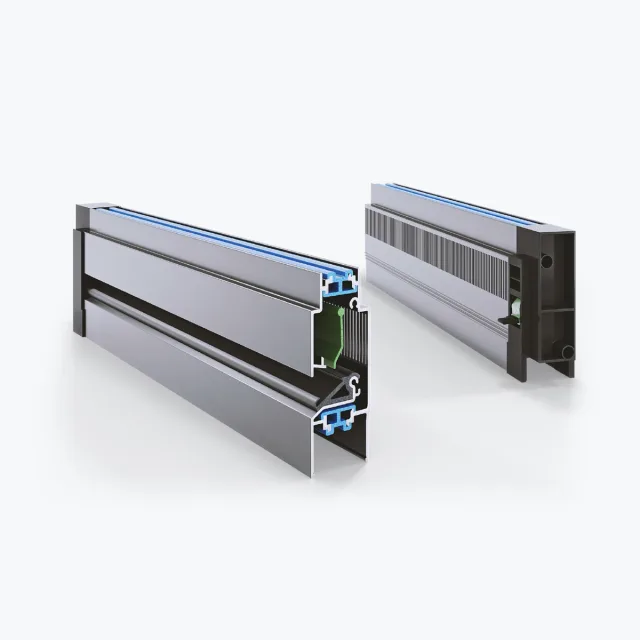
Aereco EMM air inlet
As standard, EMM Air inlets are equipped with a manual flow lock. It can work in two positions, depending on the screwing of the stand. The air stream is directed vertically or diagonally. The setting depends on the distance of the Air inlet to the reveal (too small a distance dampens the free flow of air through the Air inlet). Closed Air inlets enable the supply of a minimum air stream. It is recommended to use this option only in unfavorable climatic conditions. The EMM air inlet is controlled automatically, but the user has the option of closing the device. By setting the lever in the open position A (see the graphic below), the damper changes its position depending on the water vapor content (relative humidity) inside the room. The air flow ranges from 6-7 to 27-33 m³ / h. Lever set to the closed position B, locks the damper, the device is set to the minimum flow position, the Air inlet delivers up to 6-7 m³ / h. It is recommended to use this option only in unfavorable climatic conditions.
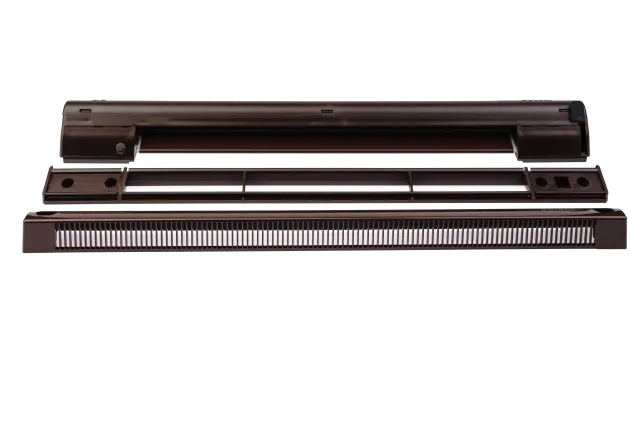
Roller Shutter air inlets - ZUROH 100 and 110
The Zuroh 100 and 110 air inlet is mounted to the flush-mounted roller shutter box from the side of the room. It detects the relative humidity in the room and regulates the opening cross-section of the dampers in the ventilation element thanks to a mechanical sensor. It detects the relative humidity in the room and regulates the opening cross-section of the dampers in the ventilation element.
The ZUROH 100 element is completely independent from the user and does not have a lock. ZUROH 110 is equipped with a knob, with which it can also be closed manually or set to continuous ventilation.
The ventilation element is mounted in place after plastering. The mounting frame is placed for plastering from the side of the room - 13mm protrusion above the surface of the box. The narrow design allows you to mount the air vent in a simple and inconspicuous way on the roller shutter box.
Acoustic attenuation: D, n, e, w = 30 dB open/34 dB closedAir capacity is 4.5 to 26 m³/h at 8 Pa

Air inlet Fvent 1250
Fvent 1250 - pressure air inlet - self-regulating. The amount of delivered air depends on the pressure difference outside and inside the room. That happens until the pressure difference reaches a certain level. This happens up to the level of the pressure difference at which the diffuser efficiency reaches its maximum value. It is intended for wooden windows. There is an option to order the air inlet in bicolor.
FFL - REGEL-Air® K for PVC windows
REGEL-Air® K for PVC windows
Regel-Air® K rebate window air inlet supplies fresh air from outside, directing it towards the ceiling, where by mixing with the existing warm air it reduces the relative humidity of the room to a safe level. This prevents the formation and development of mold and also leads to the constant discharge of toxic substances. The rebate window air inlet is made of plastic with an automatic flap adjustment for installation in pairs. For controlled air exchange without a stretch effect. The product is intended for both factory assembly and subsequent installation in already embedded windows. It can be disassembled at any time. The air inlet is not visible when the window is closed.
• Width of one pair of air inlets: 2 x single modules, 125 mm each • Regulation of air flow: automatic • Achieved air flow volumes ranging from 2 to 10[Pa]: depending on the number of air inlets 3,0 - 9,0m³/h • Classification in accordance to EN 1026 and EN 12207: class 3 • Protection against heavy rain according to EN 12208: no water penetration up to the maximum controlled pressure level of 600 Pa
Scope of application:
• It is used to prevent the formation of mold by using user-independent, non-manipulative cross-ventilation.• It aims to protect flats from humidity..
• As an element delivering air to apartments in combination with channel ventilation or waste air drainage installations.
• For the supply of air necessary for combustion by the incinerators dependent on the air taken from the rooms.
Automatic flap regulation:
REGEL-AIR® K for FFL PVC windows - delicate ventilationChanges in pressure in [Pa]24578101 pair FFL33,744,755,61,5 pairs FFL3,64,555,86,272 pairs FFL4,45,66,27,47,89
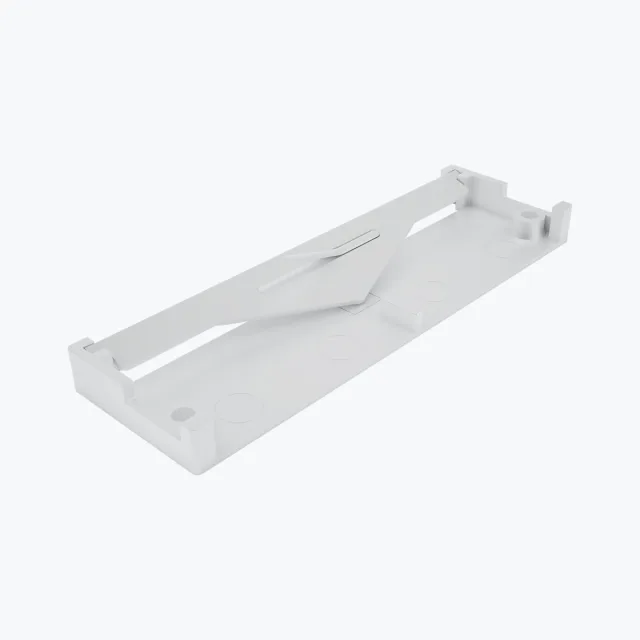
AERECO Higro
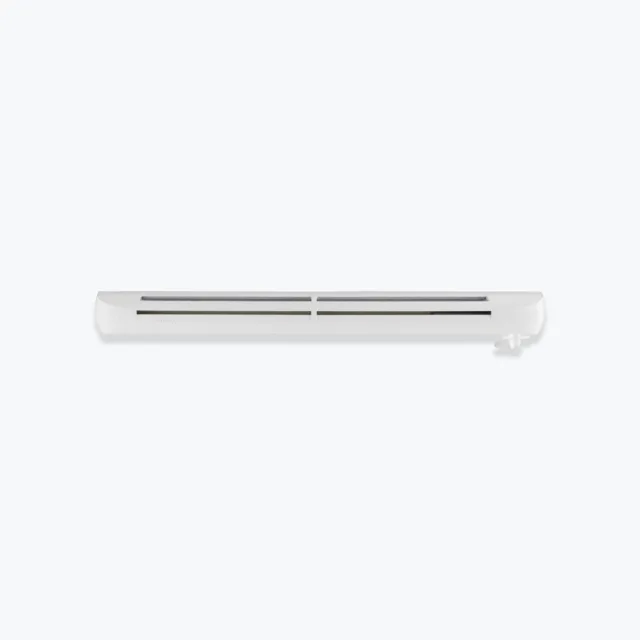
The AERECO Higro hygro-controlled ventilator independently adjusts the airflow according to the room's humidity, while also allowing the user to manually lock it in the maximum or minimum airflow position. It can be used on uPVC, timber (wooden), and aluminium windows. A distinguishing feature of AERECO Higro is its exceptionally high acoustic insulation, reaching 44 dB when closed and an impressive 42 dB when open. This solution provides enhanced safety and comfort, crucial for modern, energy-efficient construction. The vent should not be installed with roller blinds. It is not compatible with fixed or outward-opening windows.
Product characteristics:
Self-regulating trickle ventilator, where the airflow depends on the relative humidity within the room. It allows for manual locking of the ventilator in the maximum or minimum airflow position. Airflow at 10 Pa: 7–28 m³/h. Acoustic attenuation: Dn, e, w = 44 dB.
Request your individual quote
Tell us what you need – we will prepare a non-binding quote for you.
- Free consultation
- Made to measure by an authorised Eko-Okna dealer
- Installation in Upper Franconia on request