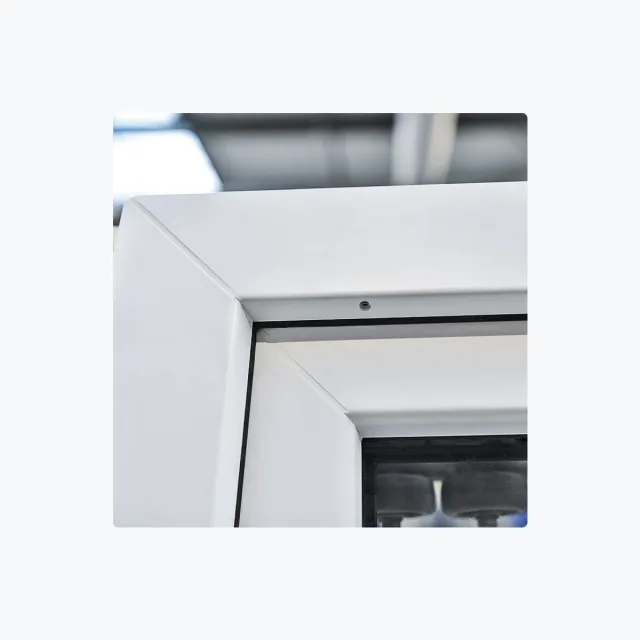
Decompression holes
Decompression holes are holes milled in the external chamber, in the upper part of the frame. Their task is to equalise the pressure and temperature inside the profiles, which increases the joinery's resistance to water by at least 2 classes and at the same time makes it much more resistant to hot weather.
As a result of temperature influence, during the summer season, white PVC profiles can reach an external temperature of approximately 50°C, while coloured profiles can reach a temperature of 65-70°C. The decompression holes cause a slow exchange of air inside the profiles and, consequently, the profiles heat up much less, which limits their potential deformation. Thanks to the use of decompression holes, the service life of our products is significantly extended.
In addition to protecting profiles against deformation, the purpose of decompression holes is to improve the way water drains away. Decompression holes make it possible for the drainage in the windows, in case of heavy rainfall, to work at full capacity, and thus these holes improve the actual water tightness of the window. When these holes are not present, negative pressure is created inside the profile (during water drainage) and thus the drainage must simultaneously drain water and supply air in order to equalise the internal and external pressure.
If there are no decompression openings, nothing changes on the certificate, because the water tightness of the window then meets the minimum requirements of the certificate. The window is then compliant with the certificate, but in reality performs much worse in terms of water drainage than a window with frame decompression. When decompression openings are used, the actual water tightness of the window becomes much better.